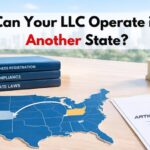
What Is Foreign LLC Registration in Another State?
Foreign LLC Registration in Another State allows an existing LLC to expand its business operations into another US state without forming a new company. The term used for this process is foreign qualification.
If you created an LLC in Wyoming and decided to open an office in California, you might need to qualify your Wyoming LLC with California’s Secretary of State before doing some kind of business in California.
An important point to note is that a foreign LLC does not automatically imply an organization formed outside the USA. Under the laws relating to US business, a foreign LLC is an LLC formed in a different US state from that in which it wants to operate.
Foreign LLC Registration in Another State makes it possible for an existing company to expand its operations without changing its home state.
When Does an LLC Need to Register in Another State?
LLCs are required to obtain foreign qualifications based on their activity that creates a significant enough nexus with another state. Each state uses its own standards for determining if registration is needed.
Activities That May Require Foreign Qualification
The LLC has to register depending on state laws and circumstances if it:
- Opens a physical office, retail store, or other business location in another state.
- Hires employees who work in that state.
- Maintains a warehouse or other business facility there.
- Regularly conducts substantial local business operations.
- Enters into ongoing transactions that amount to conducting business under that state’s laws.
For example, a Texas LLC that hires employees and leases office space in Florida may need to complete foreign LLC qualification in Florida.
When Registration May Not Be Required
Not every transaction outside an LLC’s home state requires foreign qualification. Depending on the applicable law, activities that may not require registration include:
- Conducting isolated or occasional transactions.
- Holding internal company meetings in another state.
- Maintaining a bank account without other activities that trigger registration.
- Conducting certain interstate commerce activities.
- Selling products remotely without establishing a sufficient business presence under the state’s rules.
This is just a general example and not an exception. For instance, if an LLC operates on the internet and sells its products to customers in all states, then it may be taxable in such states without being registered as a foreign LLC in those states.
Important: Foreign Qualification, State Tax Registration, Sales Tax Liability, and Employer Registrations are all distinct processes. Compliance with one will not necessarily comply with another.
Foreign LLC Registration in Another State: Step-by-Step Process
The process of foreign qualification normally consists of the steps of confirming eligibility, collecting all required documents, designation of a registered agent, and submitting an application.
Step 1: Confirm Whether Foreign Qualification Is Required
IIdentify the state where the LLC intends to conduct its business and examine the official website of that state’s Secretary of State. Ascertain whether the activities conducted by the business are required to register, and any exceptions that apply to your business.
Think about what your business does in terms of offices, employees, property, and inventory.
In case of doubt, seek the help of a business attorney.
Step 2: Check Your LLC’s Name Availability
Check if your LLC’s name is available before submission by conducting a search in the state of destination’s business entity database.
Some states will require the foreign LLC to keep the same name if it is not similar to any other names used by businesses. In case your name is not available, the state may require you to change your name and use the new one within that state.
If there is already a company in existence with the same name as the legal name of your LLC, then you will have to choose another name which is approved by the state.
The name should meet the state’s criteria before you apply for it. An approved name doesn’t automatically mean that it is trademarked.
Step 3: Obtain a Certificate of Good Standing
The Certificate of Good Standing, or certificate of existence or other similar document, is often a requirement for an out-of-state LLC when applying for registration in many states.
Typically, this certificate serves as proof of the formation and the good standing of the LLC as per the record of the issuing state. It may also serve as a confirmation of fulfillment of certain filing requirements.
Some states put restrictions on the time frame in which the certificate needs to be obtained, like within a certain number of months prior to the application process. There may be various requirements imposed by other states.
Get the certificate from the proper authority within the state that the LLC was initially registered in.
Step 4: Appoint a Registered Agent
Registered agent means the person or the company who will receive all official documents for the LLC.
When registering an LLC, one is required to have a registered agent who must have a legitimate physical address within the same state where the LLC will be incorporated. It means that having a P.O. Box address will not satisfy the needs of the state.
According to the state laws, the registered agent may either be an individual or the registered agent services in the same state.
If you happen to be a non-US entrepreneur or reside in another state, you may use registered agent services.
It is vital to make sure that the registered agent is willing to accept the position and the registered office details are accurate.
Step 5: Complete the Foreign LLC Registration Application
The form might be titled an Application for Certificate of Authority, Foreign LLC Registration, or something along those lines.
Common information requested includes:
- The LLC’s legal name and any approved alternate name.
- The state and date of original formation.
- The LLC’s principal office address.
- Name and address of the registered agent.
- Information regarding management and authorized signatories of the company, where required.
- Good Standing certificate or other appropriate evidence.
Examine the form and ensure that the information is accurate according to the records of the LLC.
While some states can accept online filings, other states can accept mailings. Some jurisdictions may need more information on top of the form.
Step 6: Submit the Application and Pay State Filing Fees
Submit the completed application form, required supporting documentation, and associated fee through the state’s formal filing process.
The filing fee varies greatly from state to state. The application can be expedited at a cost of extra fees; however, it depends from state to state, and the duration of time differs.
Keep a copy of the application, proof of the filing fee paid, and all other documents as well. In case the filing is not accepted because of missing information and naming conflict, resolve this issue and re-file again.
Step 7: Receive Your Certificate of Authority
Once the application is approved, the state can issue a Certificate of Authority or any other document which certifies that the foreign LLC is permitted to do business in that state.
The type of document used for this purpose may differ based on the jurisdiction. Store the document along with other records of your LLC.
Getting foreign qualification does not form an LLC or alter its jurisdiction in any way. The foreign qualification only allows the existing LLC to operate in the new state.
Step 8: Maintain Ongoing Compliance
Registration is not a one-time task. After approval, the LLC may need to:
- Prepare an annual or biannual report.
- Make annual or biannual payments to state fees.
- Have an agent and office of record.
- Inform the state whenever your information changes.
- Apply for state taxes and employer’s account.
- Acquire all necessary licenses.
Track the deadlines for both the home state and the destination state to avoid penalties or loss of good standing.
Completing Foreign LLC Registration in Another State helps your business meet applicable state filing requirements and maintain compliance while expanding operations.
Conclusion
Registration of Foreign LLC in Other State involves a scenario where an LLC which is registered in one state expands its operations to another state within the USA, while still maintaining registration in the state in which it was initially established. Making sure that all foreign qualification requirements are met, checking on the name availability, acquiring a Certificate of Good Standing, appointing a registered agent, and completing all documentation helps in making this process easier for business owners.
In addition to completing annual reports, other compliance requirements, and paying state fees, LLC owners need to be aware of tax registrations in both states. This will help in avoiding any issues.
Frequently Asked Questions (FAQs)
1. What is Foreign LLC Registration in Another State?
Foreign LLC Registration in Another State refers to obtaining permission for a limited liability company registered in one state to operate in another state. The other name for this process is foreign qualification.
2. When does an LLC need to register in another state?
An LLC may have to qualify as a foreign corporation if it sets up an office, employs workers, uses a warehouse, or does significant business activity in another state.
3. What documents are required for foreign LLC registration?
Common documents may include the foreign qualification application form, the Certificate of Good Standing from the domestic state, the data of registered agent, and LLC formation documents.
4. How much does it cost to register an LLC in another state?
The cost is dependent upon the filing fees for the state to which it will be filed, along with any other costs that may arise.
5. Does foreign qualification create a new LLC?
Foreign Qualification
It is not a process for forming an LLC. It only gives the existing LLC the right to do business in a different state other than its place of incorporation.