Introduction
Forming a US Limited Liability Company (LLC) as a non-US founder will give you access to foreign clients, partners, and opportunities in the United States. But registering a US LLC won’t guarantee your business protection against any possible financial issues or lawsuits.
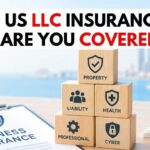
US LLC Business Insurance for Non-US Founders: Types, Costs and Requirements will be an essential topic to cover if you’re planning to start or expand your US-based business and want to find out more about the insurance types that can benefit your company.
In this article, you will discover different insurance types, expected cost estimates, legal requirements, and the way how to choose appropriate insurance as a non-US founder.
What Is US LLC Business Insurance?
American LLC Business Insurance is basically the insurance coverage obtained by the LLC against particular kinds of losses that may result from the business. This will depend on the kind of insurance coverage that is required since the coverage can cover the cost of legal defense, damages, injuries, and cyber incidents.
LLC is an arrangement under law that separates the business from its owners. However, there are several disadvantages with regard to the LLC arrangement. It is not the same as insurance coverage; there is still some risk for the owner in cases of personal guarantee, their own misconduct, or other legal and contractual matters.
In selecting insurance coverages, non-American based LLCs should not only be thinking about their home nation but also considering how their company works, where their clients are located, where their employees are based, etc.
Why Do Non-US Founders Need Business Insurance?
Foreign entrepreneurs can manage their USA LLCs from abroad and cater to American clients or offer products internationally. The lack of an office in the USA does not mean that some types of business operations will have no liability exposure.
Business insurance may be useful for non-American founders:
- Legal expenses management: Claimed losses may result in expensive defense and settlement costs.
- Contract fulfillment: American clients, exchanges, landlords, or partners might need to see an insurance certificate.
- Protection of business assets: Some insurance certificates may provide coverage for property or equipment losses.
- Increasing client’s trust: Certificates of insurance can show that a company is taking into consideration usual risks.
- Industry-specific exposure: Each industry faces its own risks, such as consultants, software developers, online retailers, etc.
Insurances do not provide an alternative to proper compliance of LLC, tax, and contracting. These are among other risk management measures.
Types of US LLC Business Insurance
The most suitable insurance coverage will depend on the activities of your LLC, how it makes money, and the risks that come with its services/products.
1. General Liability Insurance
The insurance under general liability insurance gives coverage to the business with regards to certain third party claims of injuries to people, damages to the property, and personal or advertising injury.
For example, when there is a client visiting your place of business in the US and suffers from an injury, then such claims can be covered through the general liability insurance policy. The policy may also assist in claims pertaining to property damage that takes place during business.
This type of insurance policy is normally thought about by the business owners who cater to customers, attend events, rent premises, or work at client locations.
2. Professional Liability Insurance
Professional liability insurance, also known as errors and omissions (E&O) insurance, can help cover claims alleging that professional services caused a client’s financial loss.
It may be relevant for:
- Consultants and marketing agencies
- Software developers and IT service providers
- Business advisors
- Designers and other professional service providers
For instance, the client may contend that due to an error in a consulting report, they incurred some financial losses. This is dependent on the terms of the policy.
3. Cyber Liability Insurance
A cyber liability insurance cover can be helpful in dealing with different cyber risks, including incidents, breaches of privacy, ransomware attacks, among others.
Such an insurance may come in handy in cases where you have an enterprise that involves things like holding customers’ information, carrying out e-commerce deals, transacting online, or even offering software as a service. The exclusions should be scrutinized with regard to weak security, existing incidents, and some forms of cybercrimes.
4. Commercial Property Insurance
Most commercial property insurance policies provide coverage for damages to business property that result from insured events. This can range from office furniture and equipment to merchandise depending on the type of policy taken.
A remote business owner will have lower needs in terms of property insurance compared to a company that has warehouses or an office to run its operations. Nonetheless, there might be some assets worth protecting.
5. Workers’ Compensation Insurance
Worker’s compensation insurance could provide some financial support for the qualifying workplace injuries and diseases suffered by the workforce.
The requirements vary from one state to another and depend on the number of workers, organizational structure, type of industry, and available exemptions. An immigrant setting up his company and employing people in the U.S. needs to find out the requirements in each state.
Do not assume your telecommuter or your part-time employee or your LLC member is exempt.
6. Product Liability Insurance
Product liability insurance can provide protection against certain lawsuits related to injuries and damages due to defective goods.
Such a type of insurance might be especially applicable to LLCs belonging to foreign entities, producing, importing, distributing, or selling tangible goods to American consumers. In some cases, the general liability insurance might have product liability coverage included in the package, but it is worth confirming it.
How Much Does US LLC Business Insurance Cost?
The premium of business insurance for an LLC in the USA is contingent upon the kind of coverage, the amount of coverage limit, the amount of deductible, the business industry, claims history, income, location, and the risk assessment. The below figures are just budget estimates and not actual quotations.
| Insurance type | Illustrative annual budget |
| General liability | 300–1,000 |
| Professional liability | 400–1,500 |
| Cyber liability | 300–1,500 |
| Commercial property | 300–2,000+ |
| Workers’ compensation | 500–3,000+ |
| Product liability | 500–3,000+ |
These ranges are broad planning examples. However, some firms might be paying lower, whereas higher-risk firms can end up paying more. Premiums for workers’ compensation insurance depend greatly on payroll and employee classification.
What Affects Insurance Premiums?
Insurers commonly assess factors such as:
- Business operation: A software consulting business may carry different risks compared to a manufacturing firm.
- Annual income: Income level can expose an entity to certain types of claims.
- Coverage level: An increased limit level will likely lead to higher premiums.
- Claims experience: Past claims can affect one’s insurability and rates.
- Business location: Regulations and local risk factors can play a role.
- Workforce: Size of workforce, job description and payroll can be material to underwriting.
- Client agreements: Some customers demand higher coverage or added insured status.
In order to get an accurate quote, ask for quotations based on uniform limits of coverage and deductibles.
US LLC Insurance Requirements for Non-US Founders
There is no such thing as a single federal law that mandates all LLCs within the United States to obtain specific kinds of insurance for their business operations.
State-Specific Requirements
Workmen’s compensation is one of the best examples of state regulation. Based on the state and the circumstances, the employer will be required to have workmen’s compensation after hiring employees or meeting other statutory requirements.
There may be other requirements that are industry-specific or profession-specific, or vehicle-specific. Check for your state’s requirements regarding the state you conduct business from and the state your employees work from.
Contractual Insurance Requirements
Even when insurance is not legally mandatory, a contract may require it. US customers, commercial landlords, vendors, and business partners may request:
- General liability coverage
- Professional liability coverage
- Cyber liability coverage
- Specific minimum coverage limits
- A certificate of insurance
- Additional insured status when applicable
Go through the terms of the agreement and ensure that the policy meets the requirements.
Industry-Specific Requirements
There are some businesses or industries that will have extra insurance requirements or business obligations. For instance, a company that has commercial automobiles will require commercial auto insurance, and there are licensed professionals that will require professional insurance.
Make sure that you comply with the rules for your particular industry or state.
Can Non-US Founders Buy US LLC Business Insurance?
Yes. It is possible for a US LLC to be insured by a non-US founder. It all depends on the insurance company and activities carried out by the LLC.
There are those insurance companies that accept foreign companies’ applications for insurance while others have restrictions.
You may be asked to provide:
- State of Formation of LLC and Legal Name of the LLC
- Employer Identification Number (EIN) if any
- Nature of the business
- Estimated annual revenue
- Employee information and locations of operations
- Required limits of insurance coverages
- Claims experience
- Owners and management of the Company
Insurance companies can also require a US business mailing address, bank details, payment details, or an American point of contact. The criteria vary from company to company, hence, it is important to clarify them prior to buying insurance.
Nevertheless, the creation of an LLC is not a guarantee of the automatic qualification for the purchase of any kind of insurance in the US.
How to Select an Appropriate Insurance for Your US LLC
Choosing coverage becomes easier when you assess your business risks systematically.
- Identify the risks that you face. Is your greatest risk due to professional services, products, customer interaction, cybersecurity threats, employees, or property?
- Identify your legal responsibilities. This will include an analysis of state laws, licensing issues, and employment laws.
- Check out your contracts with clients. Identify your required minimum coverage and record keeping.
- Study your insurance policies. Don’t be misled into thinking that the premium is all that matters; there’s much more to look out for.
- Determine your eligibility as an owner from abroad. Inquire from your insurance providers if they will give you insurance for LLCs owned by foreigners.
- Review your insurance requirements from time to time. Evaluate your insurance requirements again whenever you earn more money, employ people, create products, or enter new markets.
In the process of quote comparison, ensure that each insurance company knows how you really operate. Mistakes in the application process may cause coverage issues.
Insurance Issues for Non-US Company Founders to Avoid
There are many mistakes that international entrepreneurs should avoid to minimize unnecessary costs and coverage gaps.
- On the assumption that the elimination of liability via an LLC is guaranteed: Legal separation is not absolute, and insurance is for different purposes.
- Purchasing insurance coverage based solely on cost: An insurance plan that is inexpensive might be one that does not fit your particular type of business due to exclusions.
- Neglecting state requirements: State regulations on the business can vary greatly.
- Disregarding foreign operations: Operating in another country as well as serving customers abroad or hiring foreign workers can impact your insurance coverage.
- Deception of the insurance provider about the LLC’s operations: This data is important to the insurer in order to understand your specific risk profile.
A qualified insurance broker with experience in foreign-owned U.S. firms can assist in assessing coverage and raise queries that require clarification.
Conclusion
Insurance for US LLC business is something to think about when you are planning to start a business but live outside the USA and want to provide services to US clients. Not every type of insurance is necessary, and choosing the right insurance policy can help protect against risks specific to your business.
Consider reviewing your business and the requirements of the states where it operates, contracts you have with your clients and eligibility requirements for the insurance companies before choosing a policy.
Are you going to form and operate your US LLC as a foreign entrepreneur? E-Startup will be able to tell you what you should know about setting up the company. Check out US LLC Formation.
Frequently Asked Questions
1. Is business insurance mandatory for a US LLC?
However, not for all LLCs. The needs vary based on the state laws, nature of the business, employees, vehicles, licenses, and agreements. In some employment cases, workers’ compensation may be compulsory.
2. Can a non-US resident get insurance for a US LLC?
Yes, there are insurance companies that do provide insurance for a US LLC that is owned by foreigners. Requirements may vary from one insurance company to another depending on many factors.
3. How much does insurance cost for a US LLC?
Costs will depend on what kind of coverage you want, your industry, your income, and other factors. You could be charged relatively little for being in the low risk service industry but significantly more for product-oriented and high-risk industries.
4. Does general liability insurance cover professional mistakes?
In general, no. General liability typically covers specific third-party injury, property damage, and personal or advertising injury claims. Professional liability insurance is intended to cover specific claims of professional errors or omissions.